At senior levels of leadership, the margin for inconsistency narrows.
Decisions carry weight beyond immediate teams. Reactions are observed more closely than intentions. In high-pressure environments, even a subtle shift in tone can influence confidence across layers of leadership. That is why resilience is not a soft virtue. It is a strategic differentiator.
Many leaders rise through competence. They are decisive, intelligent, and driven. Yet what sustains influence over time is not intensity. It is steadiness.
Leadership Beyond Mood
Pressure is constant. Market volatility, stakeholder scrutiny, regulatory complexity, digital acceleration. The temptation to respond quickly and forcefully is real. But resilience requires something more measured.
It demands the ability to separate urgency from emotion.
Leaders who react based on mood may still deliver results in the short term. Over time, however, inconsistency erodes trust. Teams become cautious rather than creative. Conversations become guarded rather than candid.
Resilient leaders understand that their behaviour sets the emotional architecture of the enterprise. They regulate themselves before they regulate outcomes.
Adaptability Without Losing Direction
Adaptability at the highest levels is not about chasing every new trend. It is about recalibrating without abandoning core intent
When Satya Nadella reframed Microsoft’s culture around empathy and a growth mindset, the strategic pivot was visible. What mattered more was the signal it sent. Change was not a threat. It was an expectation.
Adaptability at that level requires intellectual humility. It requires the confidence to say that legacy thinking may no longer serve future growth. Leaders who demonstrate this balance strengthen credibility rather than weaken authority.
Emotional Control as Strategic Leverage
Emotional intelligence becomes increasingly critical as leadership scope expands.
During periods of economic turbulence, Indra Nooyi maintained a long-term orientation despite external pressure. That steadiness reinforced confidence among investors, employees, and partners. The message was clear. Decisions were guided by conviction, not volatility.
At senior levels, composure is not merely personal discipline. It is market signalling.
When leaders remain calm in moments of uncertainty, they reduce organisational noise. Clarity increases. Execution sharpens. Energy remains focused on opportunity rather than internal speculation.
Decision Making Under Scrutiny
High-level decisions are rarely binary. They involve trade-offs between growth and prudence, innovation and risk, speed and stability.
Resilient leaders do not rush to demonstrate control. They pause long enough to gather perspective. They invite dissent where necessary. They decide with conviction once clarity is reached.
This capacity to think clearly under pressure enhances long-term value. It signals maturity to boards and steadiness to teams.
Turning Adversity into Advantage
Disruption is inevitable. Economic downturns, technological shifts, geopolitical tensions. The differentiator is not whether challenges arise, but how leadership responds.
When the travel sector faced unprecedented shutdowns, Arne Sorenson addressed employees with transparency and resolve. His communication balanced realism with responsibility. The approach reinforced trust at a time when uncertainty was profound.
Resilience at that level is not optimism. It is disciplined realism.
Leaders who treat adversity as data rather than drama extract strategic insight from turbulence. They refine priorities. They simplify structures. They emerge sharper.
The Personal Discipline Behind Influence
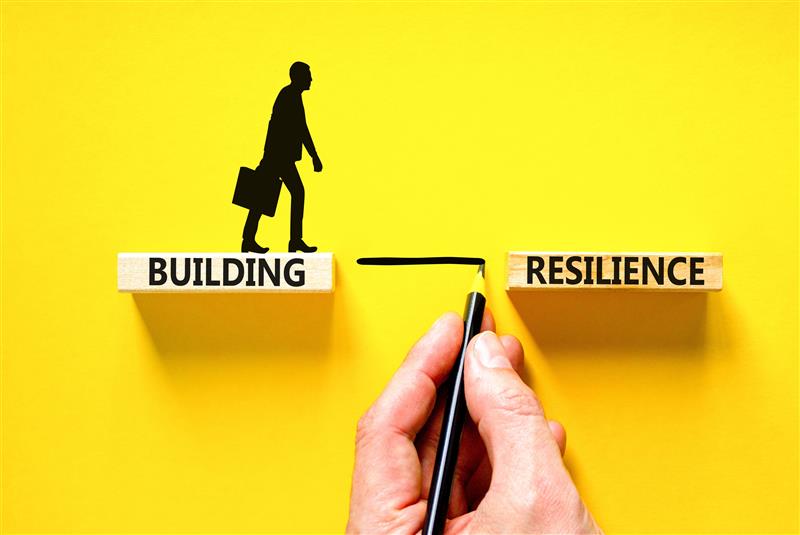
Resilience is built deliberately.
It requires structured reflection rather than reactive action. It requires trusted advisors who challenge thinking. It requires a commitment to continuous learning, even at the highest levels of experience.
Most importantly, it requires alignment between values and decisions. When leaders are internally clear about purpose, external volatility does not distort judgement.
Over time, resilience compounds. Authority strengthens. Credibility deepens. Influence expands.
In complex environments, strategic intelligence may open doors. But it is resilience that sustains leadership once inside.
And at scale, that steadiness becomes one of the most valuable assets a leader can bring to the enterprise.
India Leadership Council (ILC) by The Times Group is the premier CEO community in India, where leaders shape industries, influence policy, and drive impactful change. Join the community.