
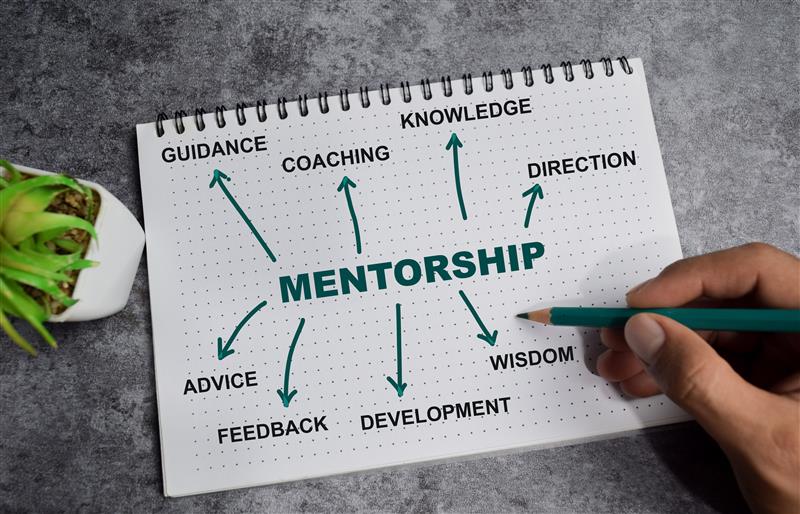
Mentorship today demands more than guidance. It requires intention.
For those in mentoring roles, the instinct to advise, correct, and direct can be strong, especially when experience offers clear answers. But the real impact of mentorship is not measured by how effectively problems are solved in the moment. It is measured by how well individuals are equipped to handle the next one on their own.
In environments where change is constant and roles evolve quickly, the responsibility of a mentor is not just to share knowledge, but to shape thinking. To build judgment. To create confidence that lasts beyond any single interaction.
Here are five ways mentors can do that with greater impact.
1. Make learning feel like discovery
It is easy to step in with a solution, particularly when the path forward seems obvious. But when every step is defined, the opportunity to think independently is reduced.
Instead, consider creating space for exploration. Share the context, outline the challenge, and invite the mentee to work through possible approaches. For example, during a project review, rather than pointing out what needs to change, ask how they would refine it and why.
This approach may take more time initially, but it builds something far more valuable, ownership. When individuals arrive at conclusions themselves, they are more likely to understand the reasoning behind them and apply that thinking in future situations.
Discovery strengthens both capability and confidence.
2. Lead with authenticity, not authority
Mentorship is most effective when it feels like a partnership, not a hierarchy. While experience brings perspective, it does not require perfection.
Being open about uncertainty or sharing past missteps can often be more impactful than presenting a fully formed answer. For instance, when discussing a complex decision, walking through how you would approach it, including what you are still figuring out, creates a more realistic learning experience.
This openness encourages participation. It signals that thinking is valued over simply getting it right. Over time, it builds a level of trust that allows for more honest conversations and deeper learning.
Authenticity creates engagement. Authority alone often limits it.
3. Ask more than you answer
One of the most powerful shifts a mentor can make is to move from answering questions to asking them.
When a mentee brings a challenge, pause before responding. Ask what they see as the core issue, what options they have considered, and what outcomes they anticipate. In a situation where a team member is struggling with stakeholder alignment, for example, guiding them to map out perspectives and possible approaches can be more effective than suggesting a ready-made solution.
This does not mean withholding support. It means using questions to sharpen thinking before adding your own perspective.
Over time, this builds independent decision making. The mentee begins to approach problems with greater structure, reducing reliance on external input.
4. Create an environment where effort feels safe
Learning involves risk, trying something new, making mistakes, and adjusting along the way. The way a mentor responds in these moments shapes whether that process continues.
Small cues matter. A dismissive reaction, visible frustration, or even impatience can discourage initiative. On the other hand, measured responses and constructive feedback reinforce that effort is valued.
For example, if an idea does not work as expected, shifting the conversation from what went wrong to what can be improved next time keeps the focus on progress. It signals that mistakes are part of development, not something to avoid.
When individuals feel supported rather than judged, they are more willing to experiment, and that is where meaningful growth happens.
5. Demonstrate the behavior you expect
Mentorship extends beyond conversations. It is reflected in everyday actions.
Mentees observe how decisions are made, how pressure is handled, and how values are applied. These observations often influence behavior more than any formal advice.
If collaboration is encouraged, it needs to be visible in how discussions are led. If accountability is expected, it should be evident in how responsibility is taken. For instance, acknowledging an oversight in a team setting demonstrates ownership far more effectively than speaking about it in theory.
Consistency between what is said and what is done builds credibility. It provides a clear reference for others to follow.
Mentorship, at its core, is about enabling independence. It is about ensuring that individuals are not just guided, but prepared.
For mentors, the shift is subtle but significant, from providing direction to developing judgment, from offering answers to strengthening thinking.
Because the true value of mentorship is not in being needed, but in making sure, over time, you are needed less.
India Leadership Council (ILC) by The Times Group is the premier CEO community in India, where leaders shape industries, influence policy, and drive impactful change. Join the community.