For decades, leadership playbooks were built around one assumption: that periods of disruption were temporary, and stability would eventually return. That assumption no longer holds.
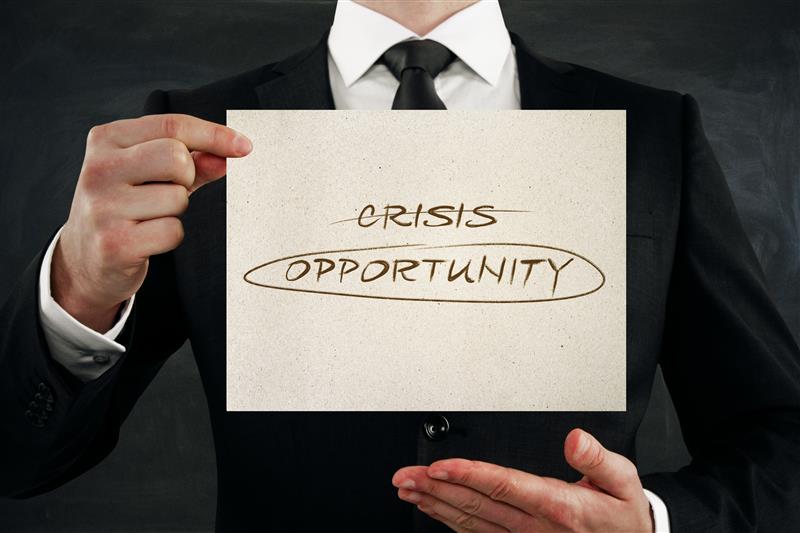
Today’s leaders are operating in a world where volatility is constant. Economic shocks overlap with geopolitical tensions. Technology cycles are compressing. Climate events, talent shifts, and regulatory changes are no longer edge cases they are part of everyday decision-making. Crisis is not an exception to the system. It is the system.
The most future-ready CEOs have internalised this reality. They are no longer waiting for the next “stable phase” to act. They are building organisations designed to move, adapt, and grow because of uncertainty – not in spite of it.
The Hard Reality of Today’s Risk Landscape
In PwC’s 2025 Global CEO Survey 29 % of leaders identified macroeconomic volatility as a top risk to growth in the year ahead, placing it above inflation and talent shortages. That makes volatility one of the most widely cited threats on the global corporate horizon.
This data underscores a shift in how leaders see risk: crisis is not an anomaly to be endured; it’s a risk to be managed continuously.
Leaders Are Responding – Not Retreating
CEOs aren’t just acknowledging uncertainty. They’re acting on it.
In a global KPMG survey of more than 1,300 CEOs, 72 % said they have already changed their growth plans in response to rapidly evolving conditions. Far from pausing investment or hiring, 92 % plan to increase headcount over the next three years, betting on resilience and human capital as engines of growth even amid uncertainty. At the same time, 69 % are planning to allocate up to 20 % of their budget to AI, signalling a strategic emphasis on capability expansion rather than waiting for calm to return.
These numbers tell a clear story: leaders are choosing action over anxiety.
Leadership That Sees Opportunity in Disruption
Future-ready CEOs treat crisis not as a disruption to normalcy, but as a catalyst for strategic advantage. They anticipate, prepare and sometimes even wrestle opportunity from uncertainty.
Take Satya Nadella at Microsoft. Faced with shifting technology cycles, Nadella didn’t wait for a stable market to commit to cloud and AI transformation. Instead, he repositioned the company culture toward continuous innovation — enabling Microsoft to lead in cloud infrastructure and generative AI at a time when many competitors were still questioning the pace of change.
Similarly, Elon Musk at Tesla and SpaceX exemplifies a readiness mindset. Musk’s leadership playbook assumes complexity and stress are constants. Rather than pausing for stable conditions, his teams iterate fast, prototype relentlessly, and embrace the pressure of tight timelines and audacious goals.
These leaders don’t just accept uncertainty — they prepare their organisations to move through it with confidence.
Resilience as Strategy: How CEOs Are Redesigning Their Playbooks
The surveys show that today’s CEOs are not defensive; they are strategic:
- Growth plans adapt to reality.
More than seven in ten CEOs have already altered growth strategies to reflect fast-changing markets. - Talent remains central.
Instead of holding jobs flat until the economic picture is clear, most CEOs are planning to expand headcount, betting on innovation capacity and human ingenuity to fuel growth. - AI isn’t optional — it’s a core capability.
Allocating significant budget to AI initiatives shows that leaders aren’t buying time — they are investing in capabilities that make their organizations more agile, more predictive and more adaptive.
In essence, leaders are building organizations that expect unpredictability, rather than designing strategies for a hypothetical stable world.
Optimism Reimagined: Leadership in an Unsettled World
The data reveals an essential truth: optimism today is not about expecting no trouble. It’s about trusting in organizational speed, talent, and strategic positioning to navigate turbulence.
CEOs who treat uncertainty as a strategic variable, not a barrier are the ones reshaping their industries. They communicate transparently, decentralize decision-making, and double down on investments even when forecasts are unclear.
By orienting their organizations around agility and purpose, these leaders demonstrate a new form of optimism: one rooted in action, preparation, and belief in human and technological potential.
The New Leadership Imperative
Crisis is no longer a detour from business as usual. It is business as usual.
Future-ready leaders stop asking when stability will return, they ask how to lead confidently through disruption. They don’t wait for calm conditions; they build organizations that can win in uncertainty.
And in a world where instability has become the default setting, that may be the most valuable leadership capability of all.
India Leadership Council (ILC) by The Times Group is the premier CEO community in India, where leaders shape industries, influence policy, and drive impactful change. Join the community.